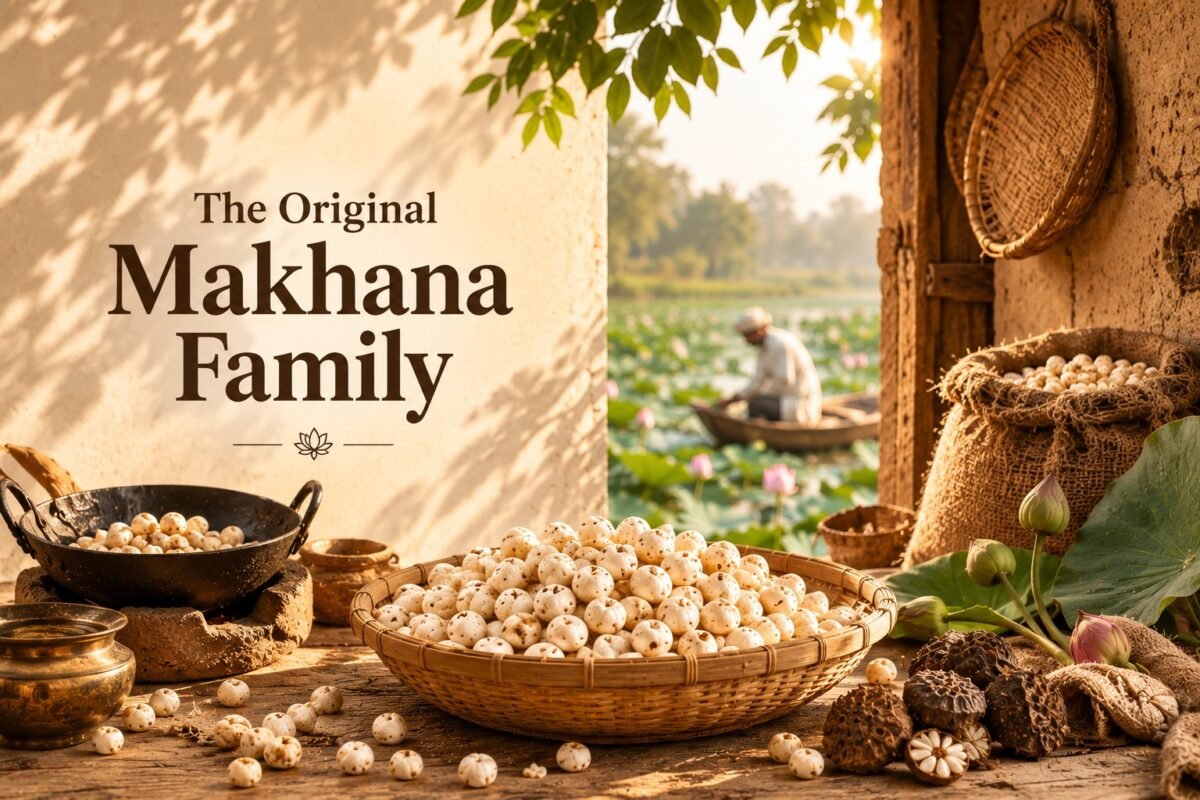

The Original Makhana Family
2026-07-29
The Real Cost of Premium Makhana
2026-08-21
The next time you buy roasted makhana online, ponder over the source of your snack. Most makhana brands buy their makhana from traders. Makhanawala’s grows theirs. There’s a difference – and it shows in every pop. Whether it’s the freshness of the roasted makhana or the evenness in the size of each pop, the quality of a Makhanawala’s roasted makhana is undeniable. Let us take a look at what it means to own the source.
The Problem With ‘Sourced From’
Most roasted makhana brands rely on middlemen/traders. That leads to inconsistent quality, inflated prices, and zero traceability. That is why it is common to get a chalky makhana next to a freshly popped one. On top of that, many brands have vague claims of being ethically sourced. But Makhanawala’s can back up all of their claims with real, hard facts because they grow their own makhana. They own the ponds.
The Process
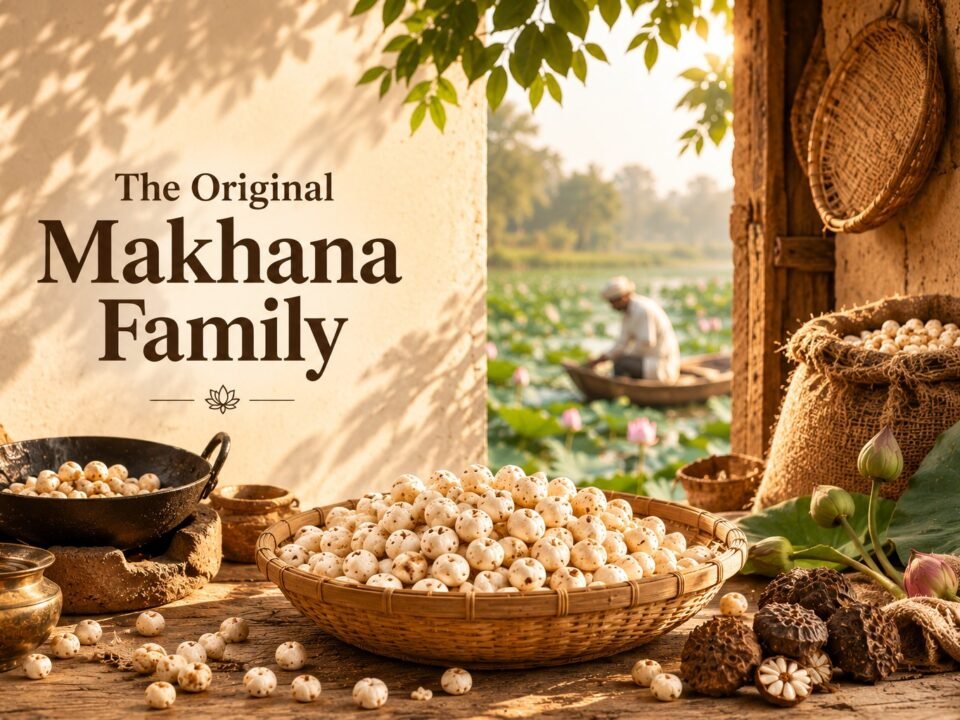
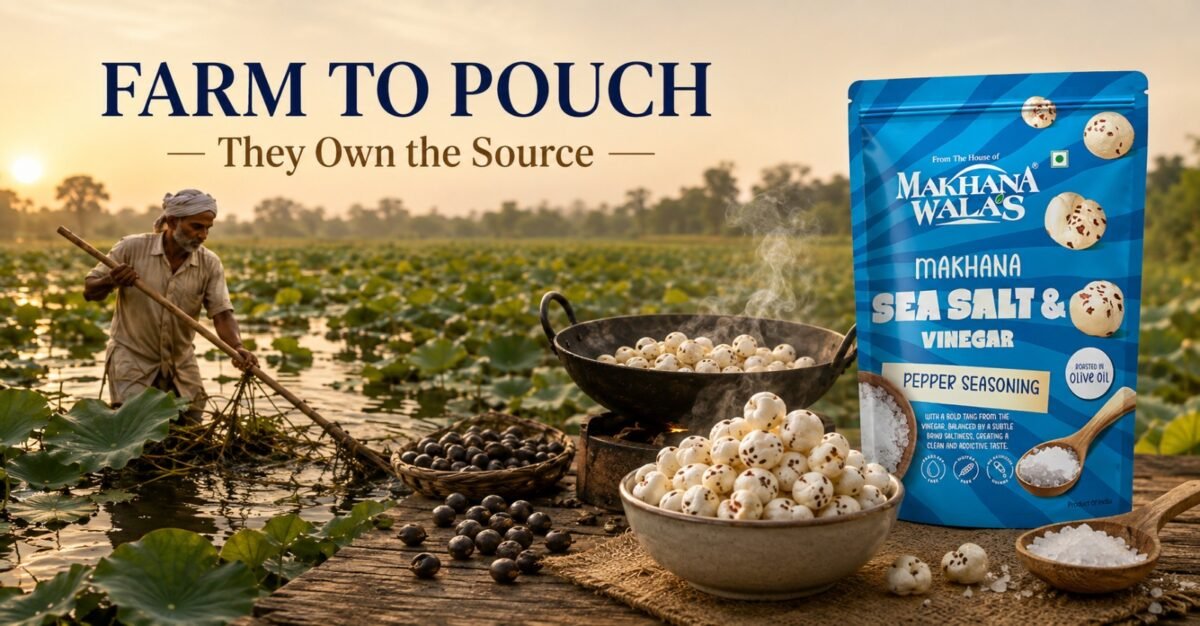
Before roasted makhana reaches your hands, it undergoes a long process. First, the makhana is at the bottom of a muddy pond. Then, skilled people have to reach to the bottom of this pond and retrieve these seeds. They use long sticks to push away the prickly plant that guards these seeds. Then reach into the sediments to feel and collect the black seeds.
This process is done with little to no protective gear. They face cuts from the prickly plants, experience skin infections from spending too much time in the water, and undergo significant strain from the entire physical act of bending and wading.
Then comes the processing and popping of the makhanas. The dried seeds are heated in large iron pans at high temperatures to prepare the inner kernel. To pop the seeds, controlled pressure or a wooden hammer is applied to break the hard outer shell, causing the trapped heat to instantly puff the seed into a white, crunchy makhana.
Then finally comes the grading process where the finished snacks are sorted and graded by size and quality before packaging. This is skilled, physically demanding work passed down through generations. This should change the way you look at a bag of makhana.
They Own The Ponds
Makhanawala’s owns its own ponds in Bihar. This is the heart of India’s makhana belt.
Pond ownership is a game changer. It controls harvest timings, water quality, seed selection, and farmer relationships. It can even be said that Makhanawala’s makhanas are ‘farm to table’ or in this case ‘farm to pouch’. There is no anonymous supply chain in between.
What Ownership Means for The Customer
By owning the ponds, Makhanawala’s has certain tangible benefits. They control the freshness of their product, the consistency of its pop/crunch, and its purity. They are also able to ensure that farmers are paid a fair wage.
From Pond to Pouch, Nothing Is Left to Chance
Every pouch of Makhanawala’s carries more than just roasted makhana. It carries the hands that pulled it from the water, the skill passed down through generations of harvesters, and the ponds Makhanawala’s has owned and worked on since 1941. That’s what ownership really means here: not just a marketing line, but full accountability for every step between the pond and your pantry. Freshness you can taste, a crunch you can count on, and farmers who are paid fairly for demanding work – all because there’s no anonymous supply chain standing in the way. Makhanawala’s doesn’t just sell roasted makhana. They grow it, they own it, they stand behind it. Shop for flavoured makhana online now, and follow the journey from pond to pouch.